Wardrobe
How to Build a Capsule Wardrobe That Actually Works
A structured approach to owning fewer clothes and wearing all of them — without sacrificing variety.

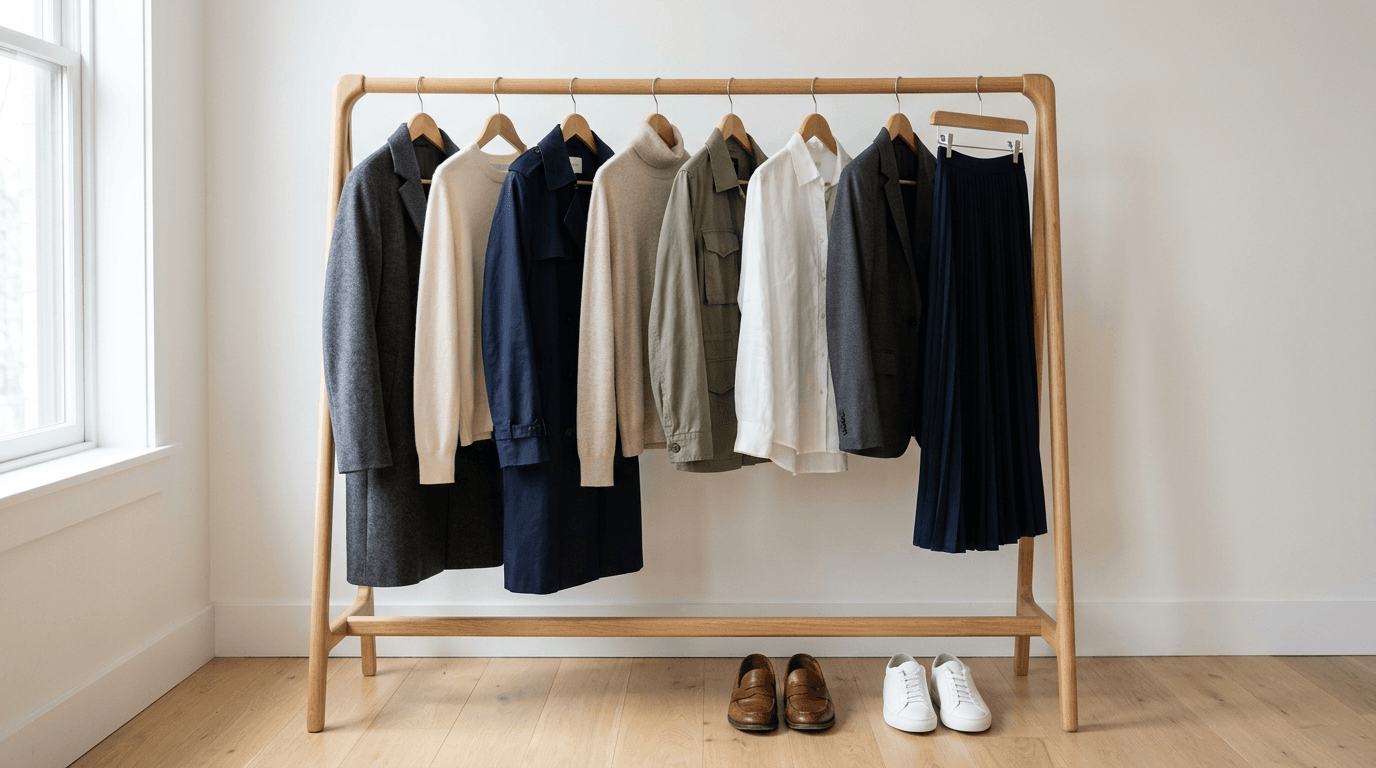
The idea sounds clean: own 30 pieces, combine everything with everything, never think about getting dressed again. In practice, most people who try a capsule wardrobe end up bored by week three and quietly start buying things they swore they did not need. The concept is not flawed — the execution usually is.
A capsule wardrobe does not start with a universal list of basics. It starts with an honest look at the roles your clothes actually play in your week. When the selection is built around your real schedule — not a Pinterest ideal — every piece earns its place and the variety problem solves itself.
Why Most Capsule Wardrobes Fail
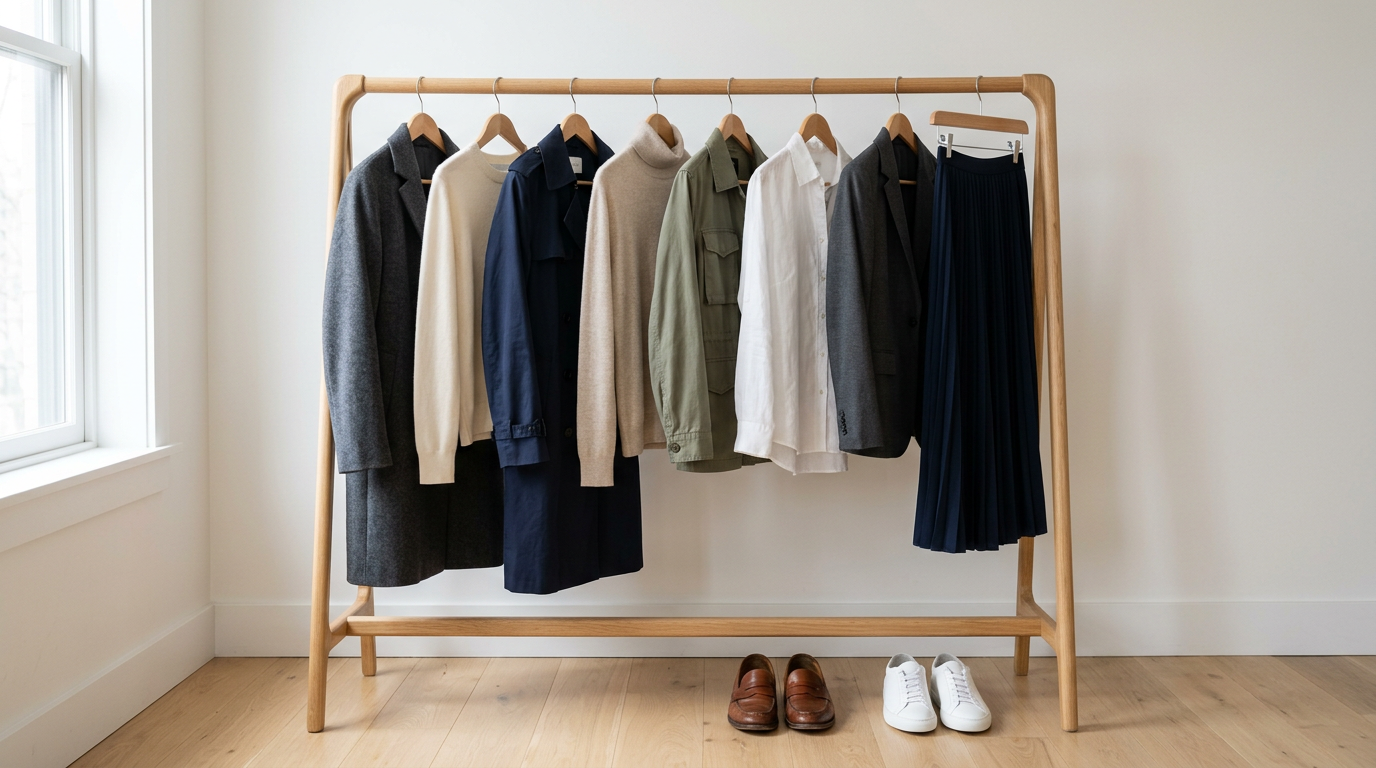
The biggest failure mode is starting from someone else's list. Every "essential capsule wardrobe" article tells you to buy a white button-down, dark jeans, a trench coat, and ballet flats. That works if your life looks like a fashion editorial. For everyone else, it creates a closet full of pieces that technically go together but do not match how you actually spend your days.
The second failure is ignoring climate and context. A capsule designed around layering is useless if you live somewhere warm eight months of the year. Linen trousers belong in a Mediterranean capsule. Merino layers belong in a northern European one. Generic advice erases these differences, and the result is a wardrobe that looks right on paper and feels wrong in practice.
The third is treating every piece as equally versatile. Not everything needs to "go with everything." A standout blazer that works with three outfits is more useful than a forgettable one that technically works with twelve but adds nothing to any of them. Capsule thinking should be about strategic overlap, not maximum interchangeability.
The Role-First Method
Instead of starting with garments, start with the roles you need clothes for. Write down the five to seven contexts that repeat in your week. For most people, this looks something like:
- Workdays — whatever your office or remote setup demands
- Casual outings — errands, coffee, weekends
- Active time — gym, walks, outdoor activity
- Evening plans — dinners, events, social occasions
- Transition moments — commuting, travel, in-between situations
Now estimate how many days per week each role takes up. If you work from home four days, your "workday" capsule needs comfortable, presentable pieces — not corporate tailoring. If your weekends involve hiking more than brunch, allocate accordingly. The goal is proportional coverage, not equal distribution.
Once you have the roles weighted, assign a core outfit count to each. Three to four complete outfits per major role, two for minor ones. This gives you a realistic target number — usually between 25 and 40 pieces including outerwear and shoes — that is anchored in your life rather than an arbitrary count.
Choosing Pieces That Cross Contexts
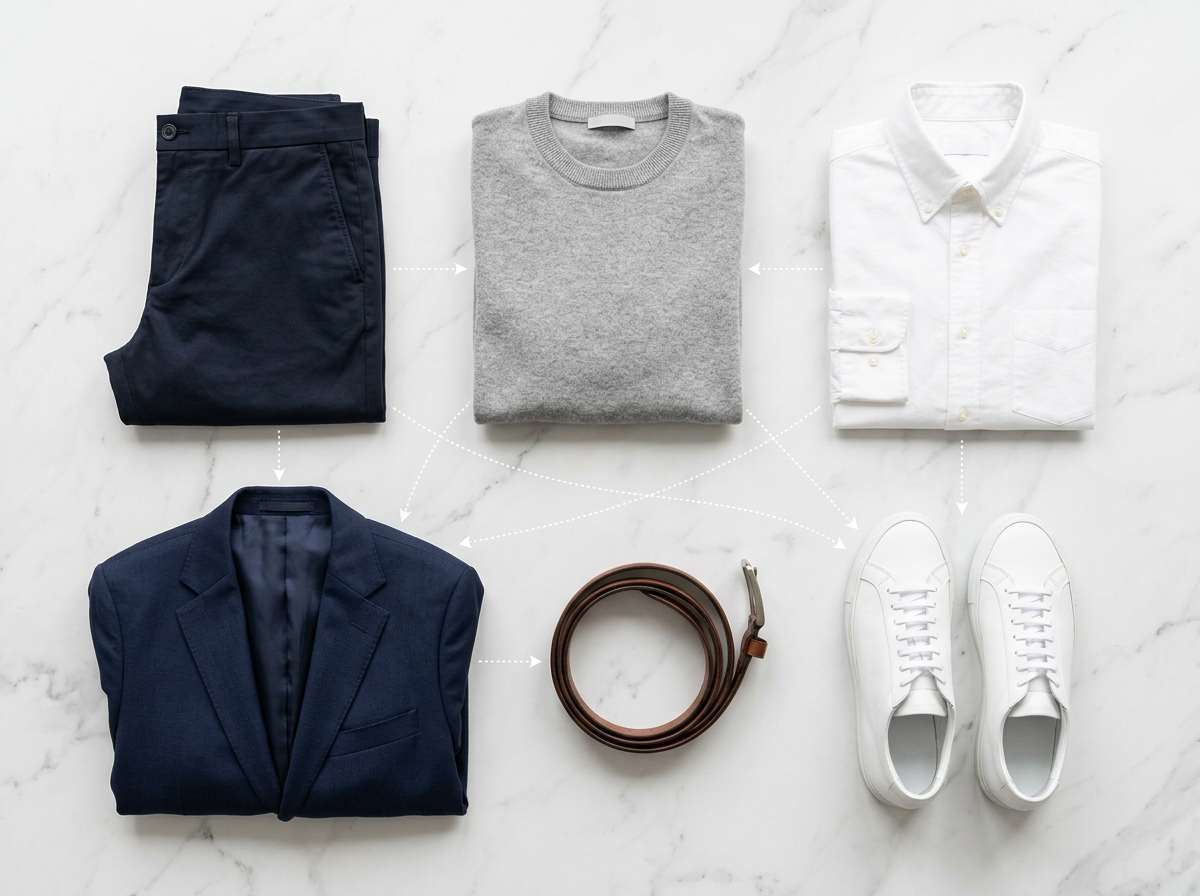
The real power of a capsule is not minimalism — it is strategic crossover. Certain garments naturally serve multiple roles, and identifying these is where the system becomes efficient instead of restrictive.
High-Crossover Pieces
Dark straight-leg trousers are the single most versatile bottom in most wardrobes. They transition from a work setting with a structured top to a weekend look with a knit or t-shirt. The key is fit — a clean, slightly tapered silhouette avoids both corporate stiffness and casual sloppiness.
A well-fitted crew-neck knit in a neutral mid-tone — think grey marl, oatmeal, or muted navy — layers under a coat for work, pairs with jeans for the weekend, and works solo for a relaxed dinner. This one piece can appear in four different outfit contexts without looking like a repeat because the surrounding pieces change its character.
Clean leather or suede shoes in a medium brown or off-white bridge casual and semi-formal territory better than either black dress shoes or white trainers alone. They soften tailored outfits and elevate casual ones simultaneously.
Low-Crossover, High-Impact Pieces
Not every piece needs to be versatile. A standout coat, a patterned shirt, or a pair of statement shoes might only work in two or three outfits — but they prevent the capsule from feeling like a uniform. Allocate two to three slots for pieces that add personality rather than flexibility. These are what make your wardrobe feel like yours instead of a template.
Common Capsule Mistakes and How to Fix Them
Buying basics first. The instinct to start with plain white tees and grey sweatshirts sounds logical, but it frontloads the wardrobe with items that have no visual identity. You end up with a closet that technically works but feels flat. Start with your hardest-to-dress context instead — the one that currently causes the most friction — and build outward from there.
Ignoring fabric weight and texture. Five neutral tops in the same jersey weight feel like duplicates even if the colors differ. Vary the textures — a ribbed knit, a brushed cotton, a lightweight merino, a structured oxford — so that each piece changes the outfit's feel even when the color stays close. Texture does more for variety than color in a reduced wardrobe.
Going too neutral. An all-neutral capsule is safe but exhausting in a different way. By week two, everything looks the same. Include one or two tonal colors that sit within your preferred palette — muted olive, dusty rose, soft rust — that can rotate through your outfits without disrupting the system. Controlled color is not the enemy of capsule thinking; monotony is.
Never auditing what you actually wear. The biggest gap in capsule planning is that people build the wardrobe once and never revisit it. After four to six weeks, check which pieces you consistently reach for and which ones stay folded. The items you ignore reveal a gap between the wardrobe you designed and the wardrobe you need. A digital wardrobe tool can simplify this by tracking what gets combined and what stays dormant, turning a vague sense of "I never wear that" into a clear pattern you can act on.
If you want to test how well your current pieces work together before committing to a capsule, try mapping your wardrobe in Loryve — it lets you see combinations across what you already own and spot the gaps before you spend anything.
Building Your First Capsule in Practice
Step one: audit, do not shop. Pull out everything you have worn in the past three weeks. These are your real wardrobe — the pieces your hands reach for without thinking. Everything else is inventory, not wardrobe.
Step two: identify the gaps by role. Compare your frequently worn pieces against your role list. You might find that your work outfits are covered but your weekend looks rely on the same two pairs of jeans and a hoodie. That is your first gap — and the first area to fill deliberately.
Step three: add crossover pieces before specialty ones. When filling a gap, choose pieces that serve at least two roles. A structured overshirt that works for casual Fridays and weekend outings fills two roles with one purchase. A single-role piece should only come in after the crossover slots are handled.
Step four: set a trial period. Commit to your capsule for six weeks before making changes. The first two weeks feel limiting — that is normal. By week four, you start seeing combinations you missed. By week six, you know what is missing, what is redundant, and what you would swap. That is the version worth keeping.
A capsule wardrobe is not a destination — it is a feedback loop. The first version is never perfect. What matters is that every piece was chosen for a reason, tested against your actual life, and kept or cut based on evidence rather than aspiration. That is the difference between a capsule that collects dust and one that makes getting dressed feel effortless.
Related articles
Wardrobe Strategy
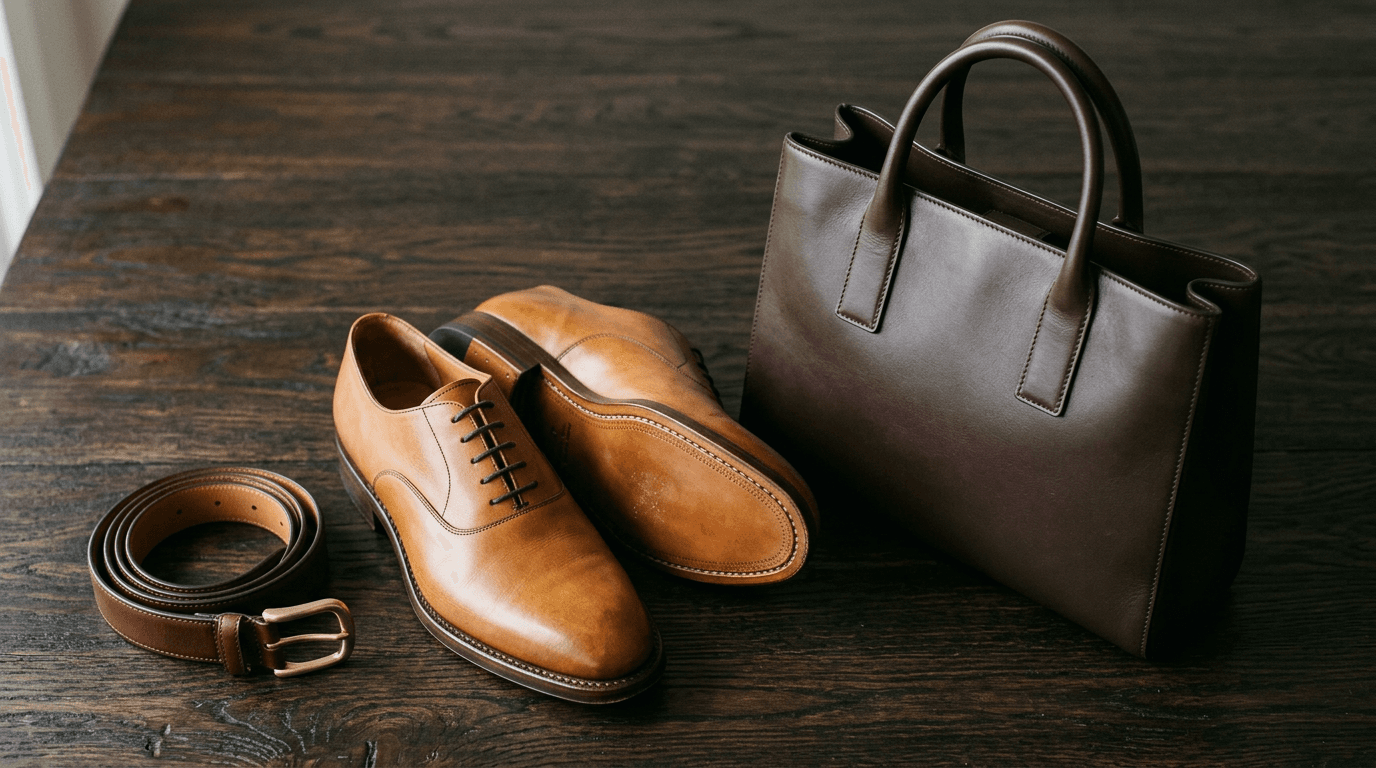
7 Wardrobe Pieces Worth Spending More On (And 5 Where It Doesn't Matter)
Spending more does not always return more. But in certain wardrobe categories, quality is the only thing that works — and the wrong call will cost you twice. This is the analytical breakdown.
Wardrobe
A One-Hour Wardrobe Audit That Actually Works
A wardrobe audit does not need to take a weekend. With the right questions and no overthinking, you can clear the clutter and see what you actually own in under an hour.
Styling
5 Outfit Formulas That Work Every Weekday Morning
Morning outfit decisions drain more energy than most people realize. These five formulas remove the guesswork and make every weekday outfit look intentional without any extra thought.