Styling
5 Outfit Formulas That Work Every Weekday Morning
Stop deciding what to wear. Start using formulas that make getting dressed automatic, fast, and consistently sharp.

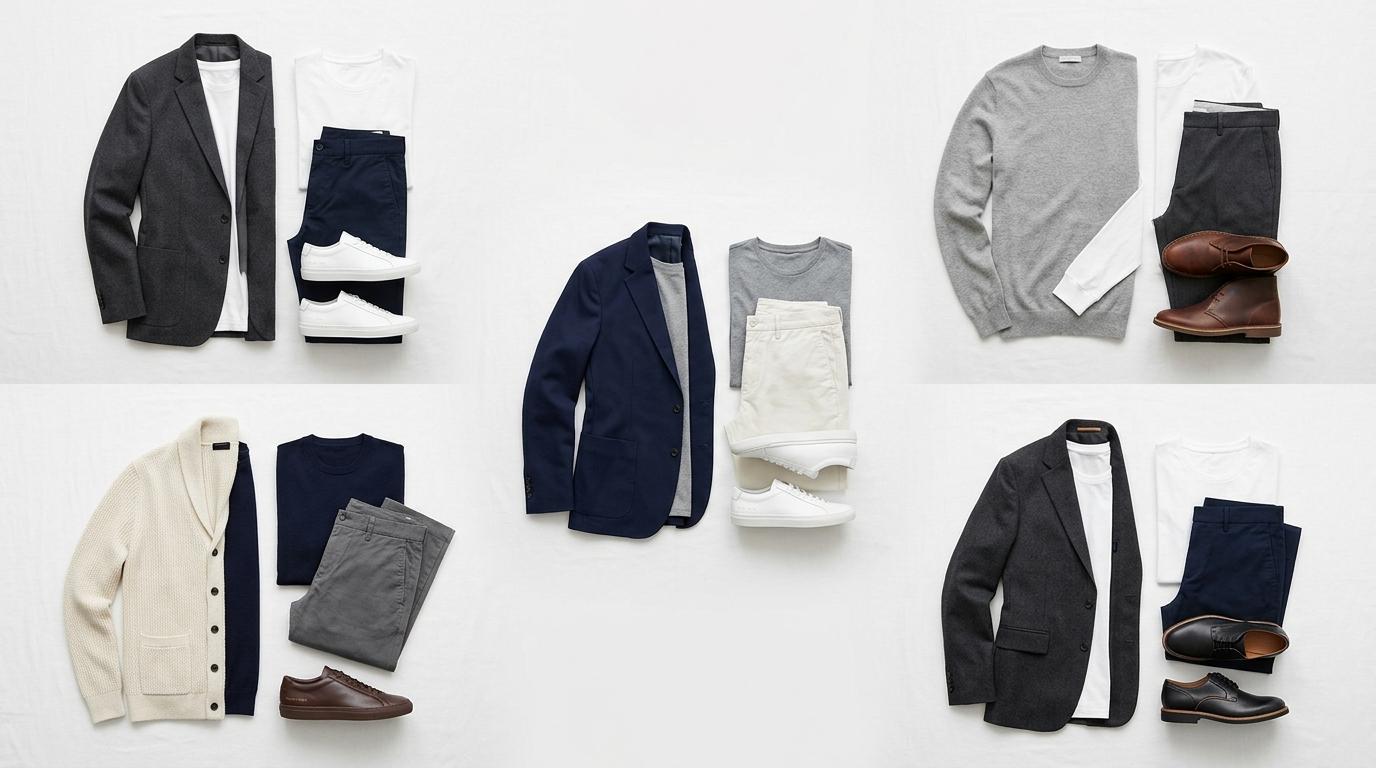
Most people spend seven to twelve minutes choosing an outfit on a weekday morning. That does not sound like much until you multiply it across five days, fifty weeks, and realize you are losing an entire workweek per year just standing in front of your closet. The issue is not a lack of clothes. It is a lack of structure.
Outfit formulas solve this. A formula is a fixed combination pattern — a silhouette pairing, a layering structure, a colour logic — that you can repeat with different pieces every day without thinking about it. You are not wearing the same outfit. You are using the same framework, and the result looks intentional every single time.
Why Formulas Beat Inspiration
Inspiration-based dressing fails on weekday mornings because it requires creative energy at the exact moment you have the least of it. You open your wardrobe, scan dozens of options, try to imagine combinations in your head, second-guess yourself, change once or twice, and leave the house feeling vaguely unsatisfied anyway.
Formulas skip the imagination step entirely. You already know the structure. All you are doing is plugging in whichever specific pieces are clean, appropriate for the weather, and match the day's context. The decision shrinks from "what should I wear" to "which version of this formula am I running today." That takes about ninety seconds.
This is not about wearing the same thing every day. It is about knowing which shapes, layers, and proportions always work for you, so the daily variation happens inside a proven framework instead of from scratch. People who dress well consistently almost always operate this way — they just rarely articulate it as a system.
The Five Formulas
1. The Anchor Layer
Structure: one strong outer layer + simple base + slim bottom.
This is the formula for days when you need to look put-together without trying hard. The outer layer — a blazer, an overshirt, a structured cardigan — does all the visual work. The base underneath stays plain: a crew-neck tee, a simple knit, a clean shirt. The trousers stay slim and quiet.
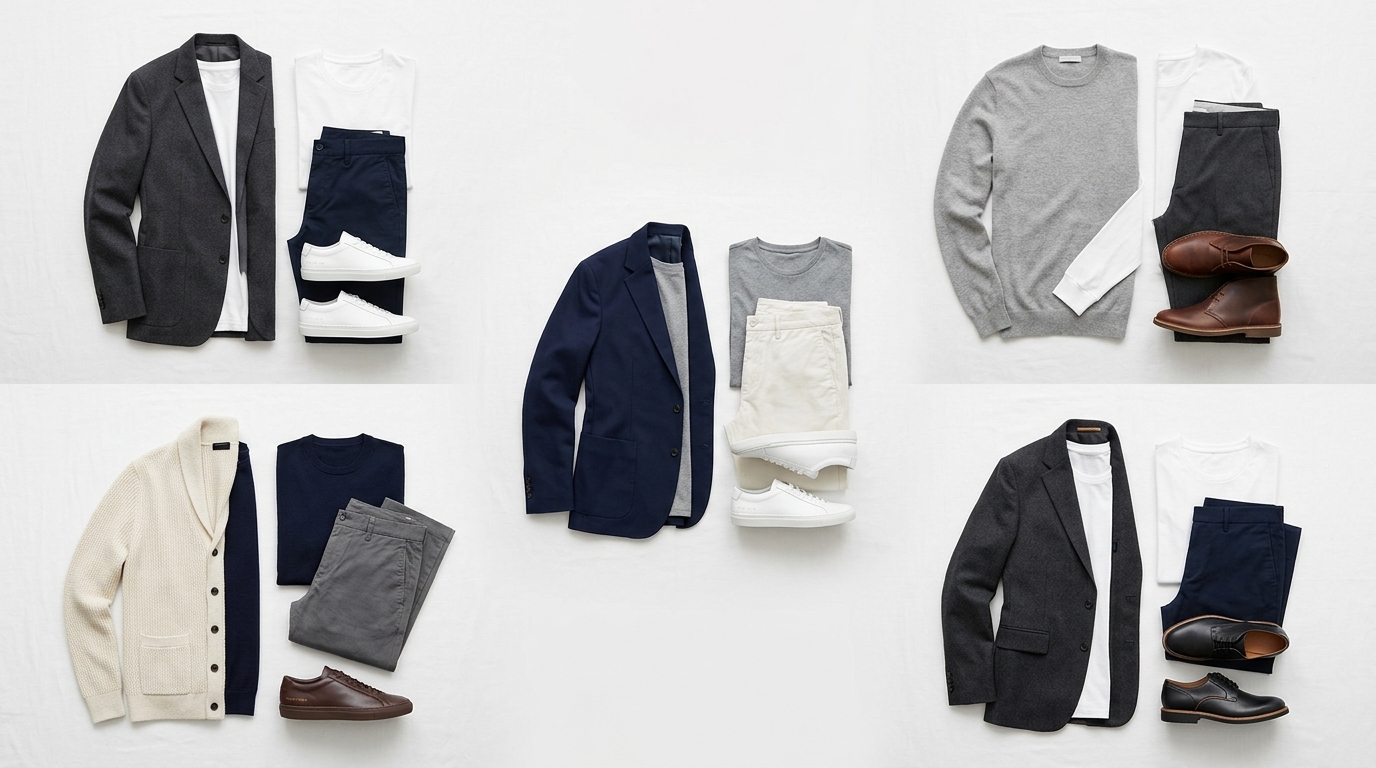
Why it works: the single dominant layer creates an instant focal point. Your eye goes to the jacket or overshirt, registers "styled," and moves on. Everything underneath just needs to not compete. Navy blazer, white tee, dark chinos. Olive overshirt, grey crew neck, black jeans. The combinations are nearly infinite because the formula is so forgiving.
2. The Tonal Stack
Structure: two or three pieces in the same colour family + one quiet contrast.
Tonal dressing is the fastest way to look polished. Pick a colour lane — grey, navy, beige, olive — and build the outfit within it. A charcoal knit over slate trousers with a grey coat. Or camel chinos, oatmeal jumper, tan suede boots. The one contrast piece is usually footwear or a bag — something small enough to ground the outfit without breaking the palette.
This formula works because the human eye reads tonal outfits as cohesive and intentional. You do not need perfect colour matching — being in the same family is enough. The slight variation between shades actually adds depth. It is one of those rare cases where "close enough" looks better than exact.
3. The Contrast Split
Structure: light top + dark bottom, or dark top + light bottom.
The simplest formula that exists, and the one most people already use without realizing it. A white or light-coloured top half with dark trousers. Or a dark knit with light chinos. The hard boundary between light and dark zones creates immediate visual structure.
The key detail most people miss: the transition point matters. A tucked-in shirt or a belt creates a clean line between the zones. An untucked shirt blurs it. Neither is wrong, but the tucked version reads sharper for office settings, while the untucked version works better for casual Fridays and creative environments.
4. The Texture Play
Structure: same neutral palette + three distinct textures.
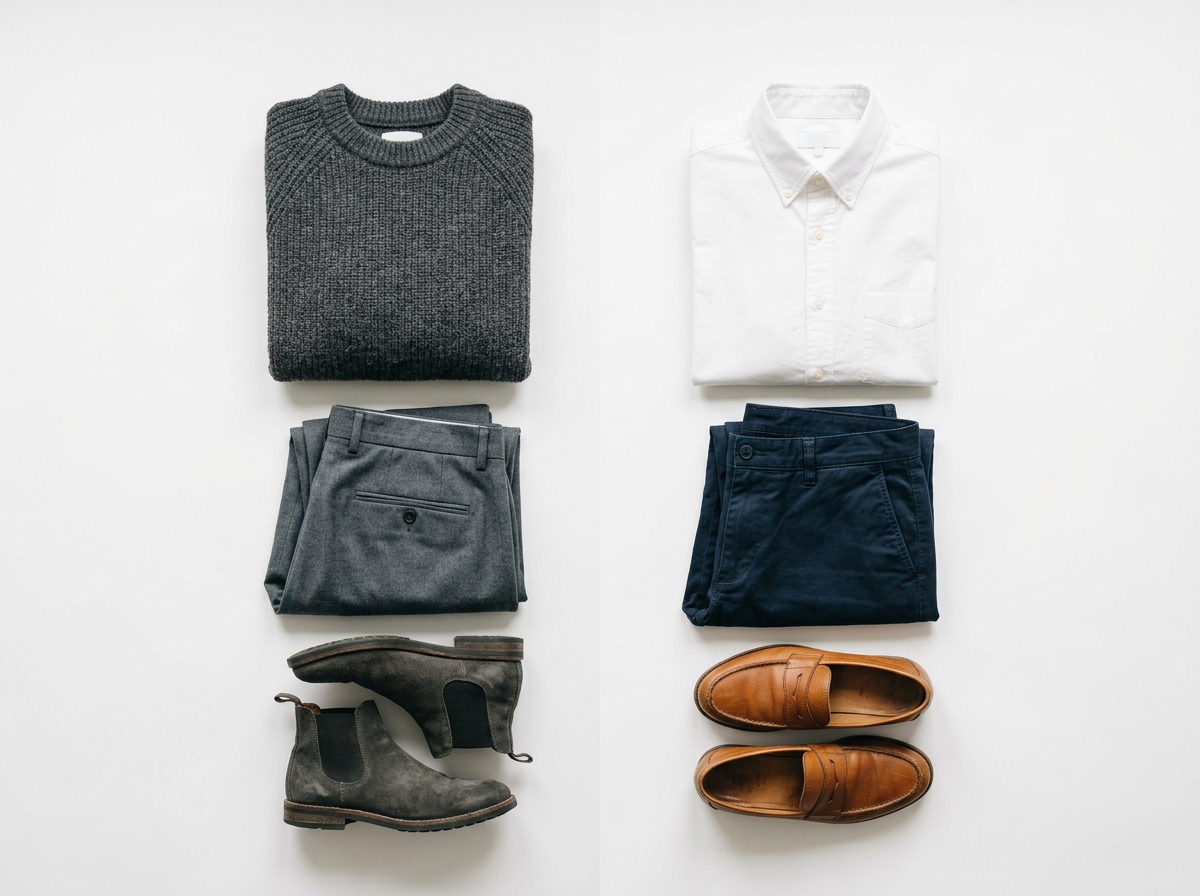
This formula is for people who find solid-colour outfits boring but do not want to deal with pattern mixing. Keep the colours neutral — blacks, navies, greys, creams — and vary the textures instead. A wool knit over a cotton oxford with corduroy trousers. A suede jacket over a jersey tee with denim. The visual interest comes entirely from how different fabrics catch and absorb light.
Three textures is the sweet spot. Two can feel accidental. Four starts to compete. Three gives you enough contrast to look layered without looking complicated. And because everything stays in a neutral palette, nothing clashes — the textures do the talking instead of the colours.
5. The Smart Casual Reset
Structure: one dressy piece + two casual pieces.
This is the formula for environments where full formal is too much and full casual is too little. Take one piece from the dressy side of your wardrobe — tailored trousers, a button-down shirt, leather shoes — and pair it with two pieces from the casual side. Tailored trousers with a hoodie and clean trainers. A crisp shirt with jeans and suede loafers. A blazer with a tee and relaxed-fit chinos.
The ratio matters. One dressy piece elevates. Two dressy pieces tip into formal. The single dressy element acts as an anchor that lifts the casual pieces around it, and the result sits in that sweet spot where you look intentional without looking like you are trying.
Building Your Own Rotation
Five formulas across five weekdays means you never repeat a structure within the same week. Monday is the Anchor Layer. Tuesday is the Tonal Stack. Wednesday is the Contrast Split. And so on. You can shuffle the order, but the point is that each day has a pre-assigned framework.
To make this work, you need roughly twelve to fifteen versatile pieces that slot into multiple formulas. A navy blazer works in the Anchor Layer and the Smart Casual Reset. Dark chinos work in the Contrast Split and the Texture Play. A grey crew-neck knit works in practically all five. The overlap is the point — fewer pieces, more combinations, less decision fatigue.
If you want to see which pieces in your wardrobe already fit these formulas,try mapping them in your Loryve wardrobe — it makes spotting the gaps and overlaps much faster than doing it in your head.
Mistakes That Break the System
Owning too many statement pieces. Formulas work because your base pieces are quiet and interchangeable. If half your wardrobe is loud prints, bold colours, or distinctive cuts, you cannot plug them into a formula without the outfit fighting itself. Keep statement pieces to around twenty percent of your wardrobe and let the rest be the workhorses.
Ignoring fit within the formula. A formula gives you the structure, but fit is still the execution. The Anchor Layer falls apart if the blazer is too tight in the shoulders. The Contrast Split looks sloppy if the trousers are too long. Formulas do not fix bad fit — they just make well-fitting clothes work together effortlessly.
Treating formulas as rigid rules. These are starting points, not prison sentences. Some mornings you will feel like swapping the Texture Play for something completely different. Good. The formula exists so you always have a reliable fallback, not so you never deviate. The best-dressed people follow their system eighty percent of the time and improvise the rest.
Forgetting shoes. Footwear is where most formula outfits are won or lost. The wrong shoes can undercut an otherwise sharp outfit. Keep three to four pairs in rotation that each serve a different level of formality: clean trainers, suede loafers or derbies, and one pair of boots. That covers every formula.
The Weekday Wardrobe in Practice
Here is what a full formula week looks like with real pieces:
Monday — Anchor Layer: navy blazer, white crew-neck tee, dark grey slim chinos, white leather trainers.
Tuesday — Tonal Stack: charcoal wool jumper, slate tailored trousers, dark grey suede Chelsea boots, black leather belt.
Wednesday — Contrast Split: oatmeal linen shirt (tucked), black straight-leg jeans, tan suede loafers.
Thursday — Texture Play: navy corduroy overshirt, grey marl cotton tee, black denim, black leather boots.
Friday — Smart Casual Reset: tailored navy trousers, relaxed grey hoodie, clean white trainers.
That is five distinct outfits using roughly fourteen pieces with significant overlap. None of them required morning creativity. All of them look deliberate. The system works because the structure is fixed and the variation comes from which pieces you insert — not from reinventing the wheel every day.
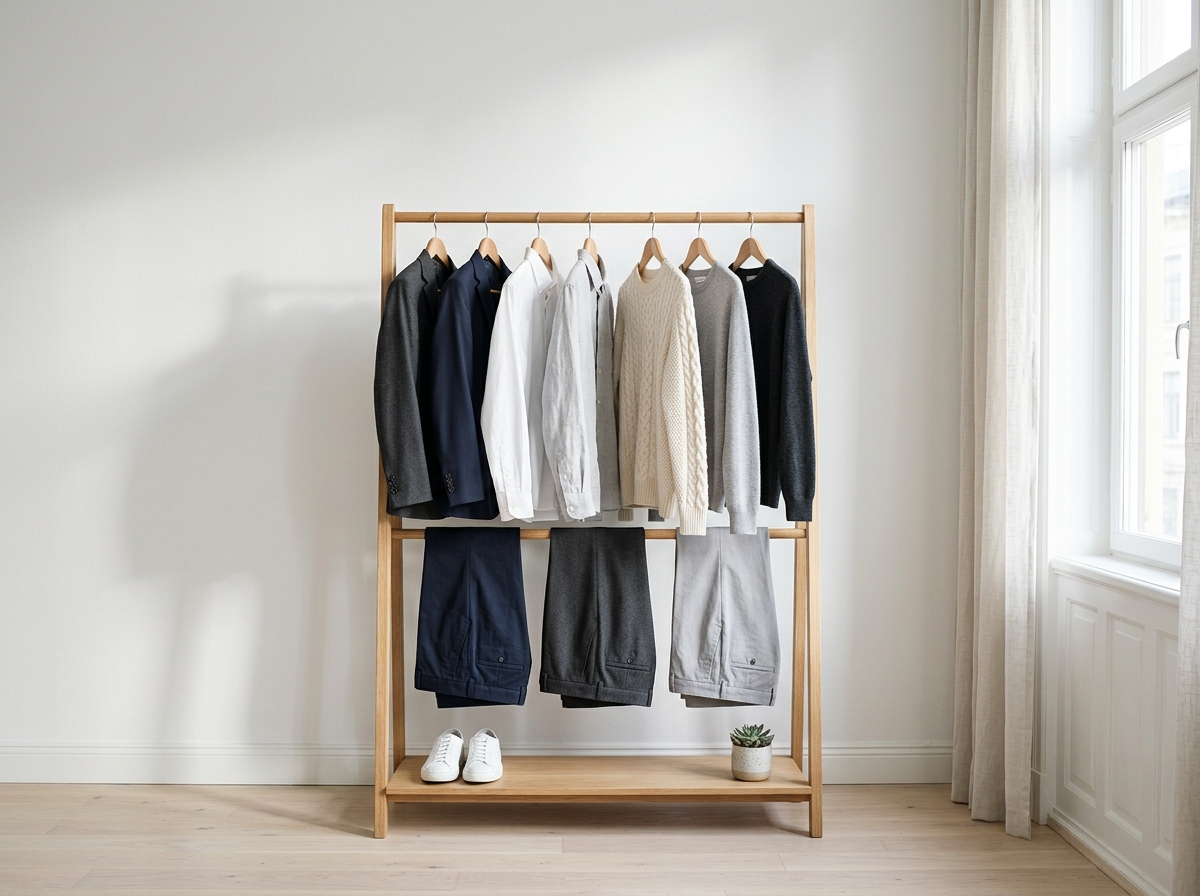
Getting dressed should not be a creative exercise every morning. Save that energy for the things that actually need it. Pick your formulas, stock the right pieces, and let the system handle the rest. You will look better on autopilot than most people do after twenty minutes of deliberation.
Related articles
Wardrobe Strategy
7 Wardrobe Pieces Worth Spending More On (And 5 Where It Doesn't Matter)
Spending more does not always return more. But in certain wardrobe categories, quality is the only thing that works — and the wrong call will cost you twice. This is the analytical breakdown.
Wardrobe
How to Build a Capsule Wardrobe That Actually Works
Most capsule wardrobe guides list the same 30 basics and call it done. Here is a system that starts with your actual life and builds outward from there.
Occasion Dressing
Occasion Dressing Decoded: What Every Dress Code Actually Means
Cocktail attire. Smart casual. Black tie optional. Every invitation carries a dress code, and most of them are misread. Here is the definitive guide to what each one actually requires.