Wardrobe Strategy
7 Wardrobe Pieces Worth Spending More On (And 5 Where It Doesn't Matter)
Cost-per-wear is the right framework — but most people apply it to the wrong pieces. Here is where quality investment actually compounds.

Most wardrobe advice on where to spend money is either too vague (“invest in quality basics”) or too prescriptive (“always buy expensive shoes”). Neither is particularly useful without the reasoning behind it. The actual question is not whether to spend — it is which categories of the wardrobe respond to quality in ways that are genuinely measurable, and which ones do not.
The answer is less intuitive than most people expect. Some categories where people reflexively spend more show no functional advantage over mid-range alternatives. Others — particularly the structural and load-bearing pieces that anchor the whole wardrobe — deteriorate rapidly at lower price points in ways that directly undermine the outfits they appear in.
The Logic Behind "Worth It"
Cost-per-wear is the correct framework: the real cost of a garment is its price divided by the number of times it is actually worn. A £300 coat worn 200 times costs £1.50 per wear. A £60 coat worn 12 times before it loses its shape costs £5.00. The expensive coat was the cheaper decision.
But cost-per-wear only becomes useful when you apply it honestly. The calculation depends on two variables that are easy to inflate: how often you will actually wear the piece, and how long it will hold up. Both of these are affected by category. A well-constructed leather shoe that can be resoled will last years. A well-constructed T-shirt will still eventually fade and thin. The category determines the ceiling of what quality can actually deliver.
There is also a second variable beyond durability: visual compounding. Some pieces appear in every outfit — shoes, outerwear, core trousers. Their quality is seen constantly, and their deterioration is seen constantly. Others appear rarely enough that quality difference is negligible at the level of actual use.
7 Pieces Where Quality Pays Off
These are the categories where quality investment produces measurable returns — in wear-count, durability, and the compounding visual impact of appearing in multiple outfits per week.
- Leather footwear you wear regularly. A quality leather shoe can be resoled, reconditioned, and worn for a decade. The construction of the upper, the quality of the leather, and the type of sole all determine whether this is possible. Cheap leather shoes delaminate, crease badly, and cannot be repaired. They also drag down every outfit they appear in once the surface starts to fail — and that process begins quickly. For any shoe worn three or more times per week, quality is not optional.
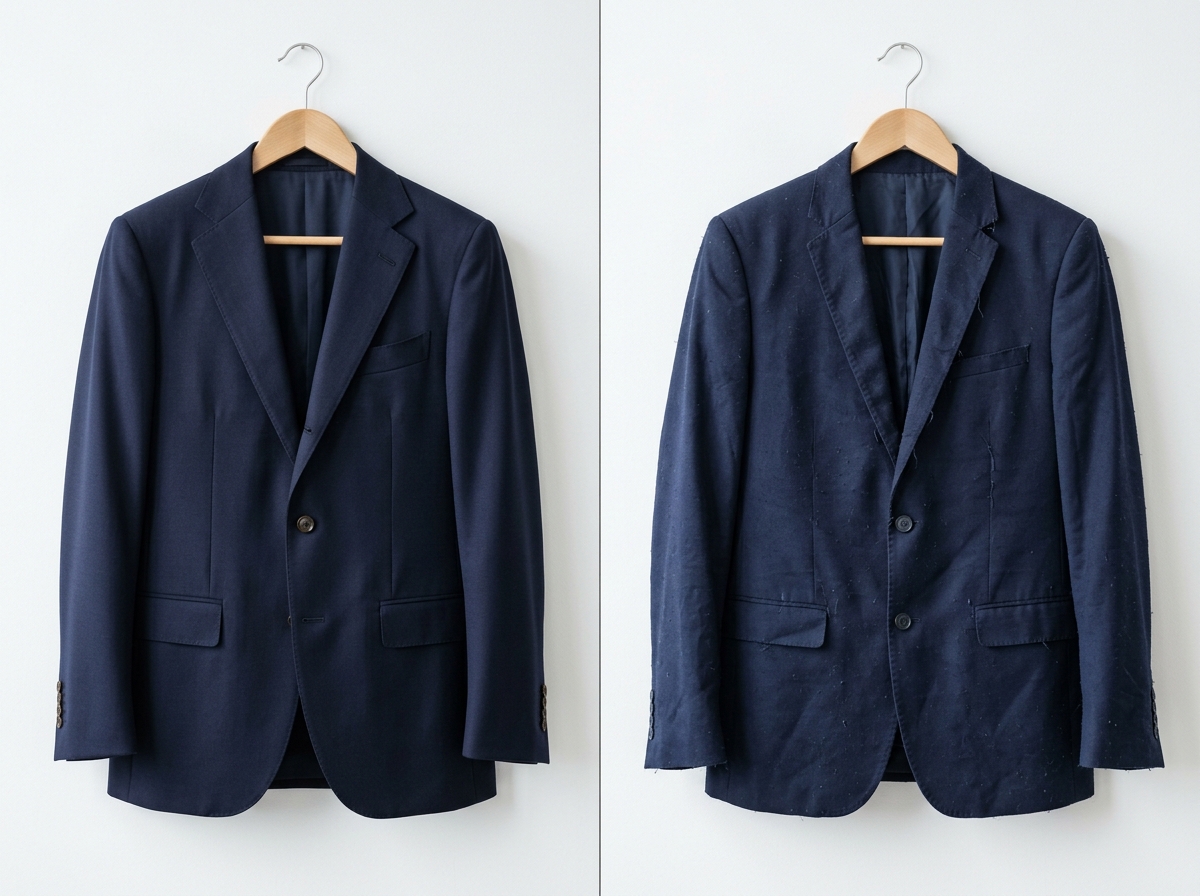
- A tailored blazer or structured jacket. The blazer is the piece most affected by construction quality because its job is to hold shape against a body that is moving. A poorly constructed blazer billows, bags at the back, and loses shoulder structure within a season. A well-constructed one holds its line. The fabric matters here too — a fused interlining (common at lower price points) will bubble after cleaning. Canvas construction does not.
- A winter coat. Outerwear is the first thing people see and the last thing they remove. It is also worn daily for four to five months of the year, which means wear-count accumulates fast. A quality wool coat in a neutral colour — navy, camel, charcoal — will outlast several synthetic alternatives and look significantly better in year three than its cheaper counterpart looks in year one.
- Knitwear that sits directly against skin. Fine cashmere or merino knitwear worn as a base layer is visible in every outfit it appears in. Cheap knitwear pills rapidly, loses shape, and develops holes at the elbows and collar within two seasons. The difference between a good merino turtleneck and a synthetic one is visible in the drape, the surface, and the way it recovers from washing. This is one of the clearest quality signals in a wardrobe.
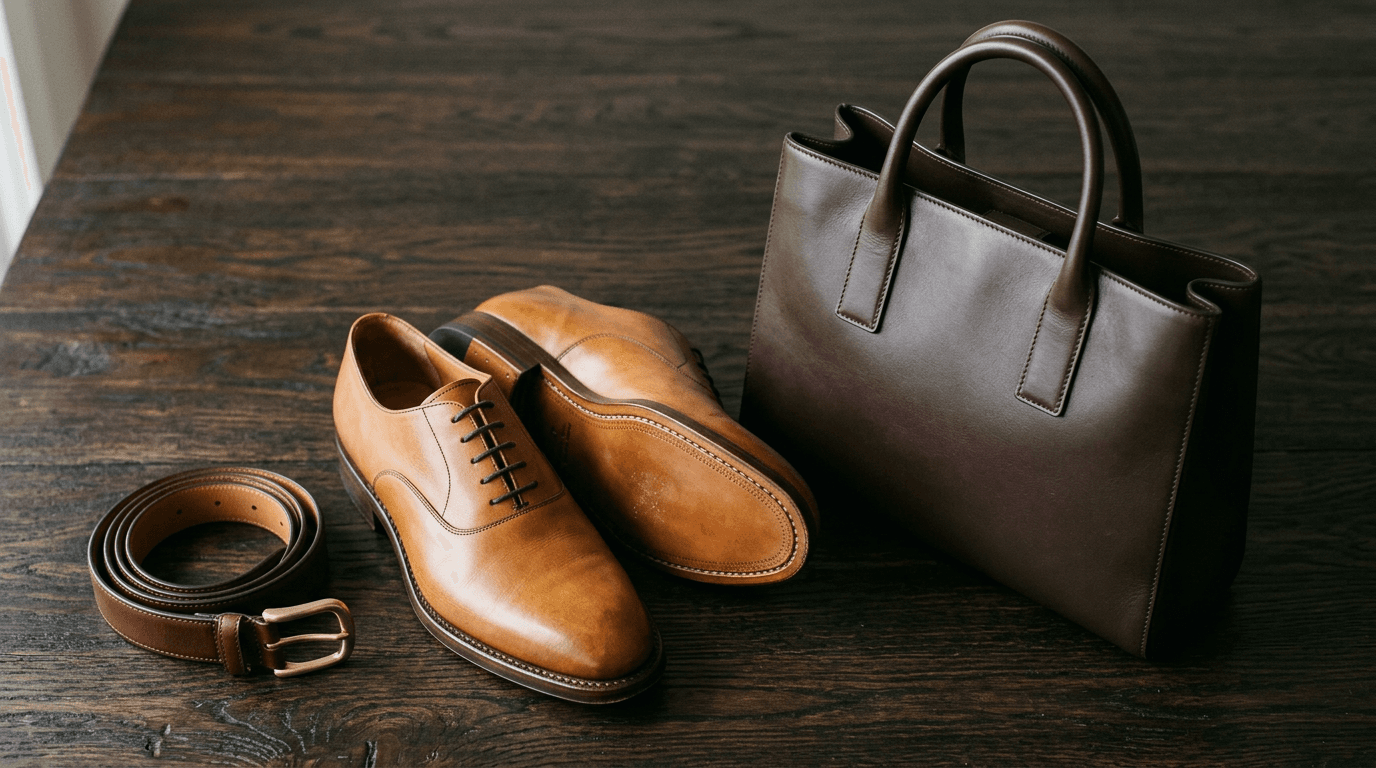
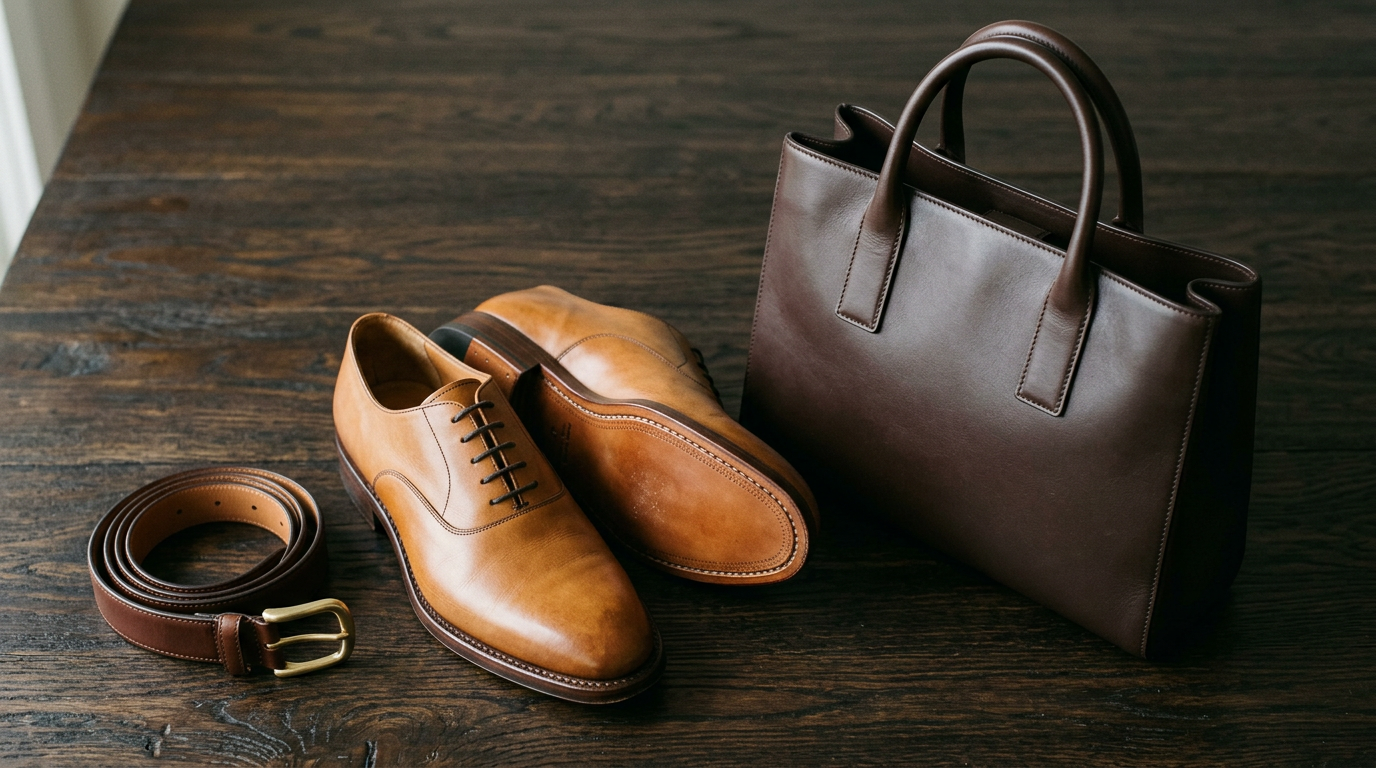
- Core leather goods — belt and everyday bag. A leather belt that is seen every day and a bag that appears in most outfits are both high-frequency, high-visibility items. A quality leather belt keeps its shape, does not crack along the holes, and ages attractively. A structured leather bag holds its form across years of use. Both are visible anchors to multiple outfit combinations, which makes their quality level consistently apparent.
- Neutral trousers worn weekly. A well-constructed trouser in black, navy, or charcoal wool-blend, worn multiple times per week, accumulates enormous wear-count. Quality here means: fabric that does not pill at the inner thigh, a cut that holds its crease, and a waistband that does not stretch out. Cheap trousers in heavy rotation fail within a season. Good ones last years.
- A fitted base shirt or button-down. The shirt is the most visible layering piece in most wardrobes — collar above a knit, cuffs below a jacket, body visible under an open blazer. Fabric quality is immediately legible: thin cotton goes translucent, cheap poplin wrinkles permanently. A quality Oxford cloth or poplin shirt in white or pale blue, cut correctly and maintained well, outlasts multiple cheaper alternatives by a significant margin.
5 Pieces Where Spend Does Not Scale With Return
These are the categories where quality ceiling is low regardless of spend, wear-count is insufficient to justify premium pricing, or the item is inherently short-cycle — worn out, faded, or outdated before durability becomes a meaningful variable.
- Plain T-shirts. A T-shirt worn as a base layer under everything will fade, develop neckline stretch, and thin at the hem regardless of its original quality. The failure mode is washing frequency and friction against outerwear, not construction. A well-priced mid-range T-shirt replaced annually costs less and performs identically to an expensive one that fails at the same rate but takes longer to replace without guilt.
- Casual weekend tops and shirts. A linen shirt or casual cotton overshirt worn on weekends accumulates far lower wear-count than a work-week staple. The cost-per-wear math rarely justifies premium spend. Mid-range options in good fabric at lower prices perform well enough for their actual frequency of use.
- Trend-specific pieces. Any piece bought primarily because it is current — a specific silhouette, a fashion-cycle colour, a detail that reads immediately as a particular season — has a built-in expiry date. Spending premium prices on a piece you will stop reaching for in eighteen months is not a quality investment. It is paying more for the same exit.
- Gym and activewear. Performance fabric deteriorates through washing regardless of price point. The gap between mid-range and premium activewear is real in terms of initial feel, but compresses significantly after 50 washes. Unless you are buying for a specific technical performance requirement, mid-range activewear from a reliable brand is the rational choice.
- Inner layering pieces that are never seen. A thermal base layer, a layering vest, a basic cotton undershirt — pieces that exist to function, not to be visible. These are high-frequency in wear but low in visual impact. Buy them at a price point that makes replacing them straightforward when they wear out, which they will.
Applying the Framework Before Your Next Purchase
Before committing to a purchase, run the piece through three questions.
Will I wear this more than 50 times? For most core wardrobe pieces, the answer should be yes before you buy them at all. But it is a useful calibration for the spend level. A piece you project wearing 100 times can absorb a higher price point than one you project wearing 30.
Is this category one where quality compounds? Refer to the seven categories above. If the piece is structural — tailored, constructed, made of leather, or worn daily as part of the visible outfit — quality matters in ways that are visible and durable. If it is a high-wash, high-friction, or trend-dependent item, quality returns diminish quickly.
What does failure look like for this piece? A leather shoe that starts to delaminate drags down every outfit. A T-shirt that goes slightly translucent after 20 washes is annoying but not catastrophic. The downstream cost of failure is different across categories, and it should influence the upfront spend accordingly.
The goal is not to spend more across the board. It is to concentrate spend in the categories where it compounds, and redirect it away from the ones where it does not. Applied consistently, this produces a wardrobe that performs better and costs less over time than one built on uniform spend across all categories.
Related articles
Wardrobe
How to Build a Capsule Wardrobe That Actually Works
Most capsule wardrobe guides list the same 30 basics and call it done. Here is a system that starts with your actual life and builds outward from there.
Styling
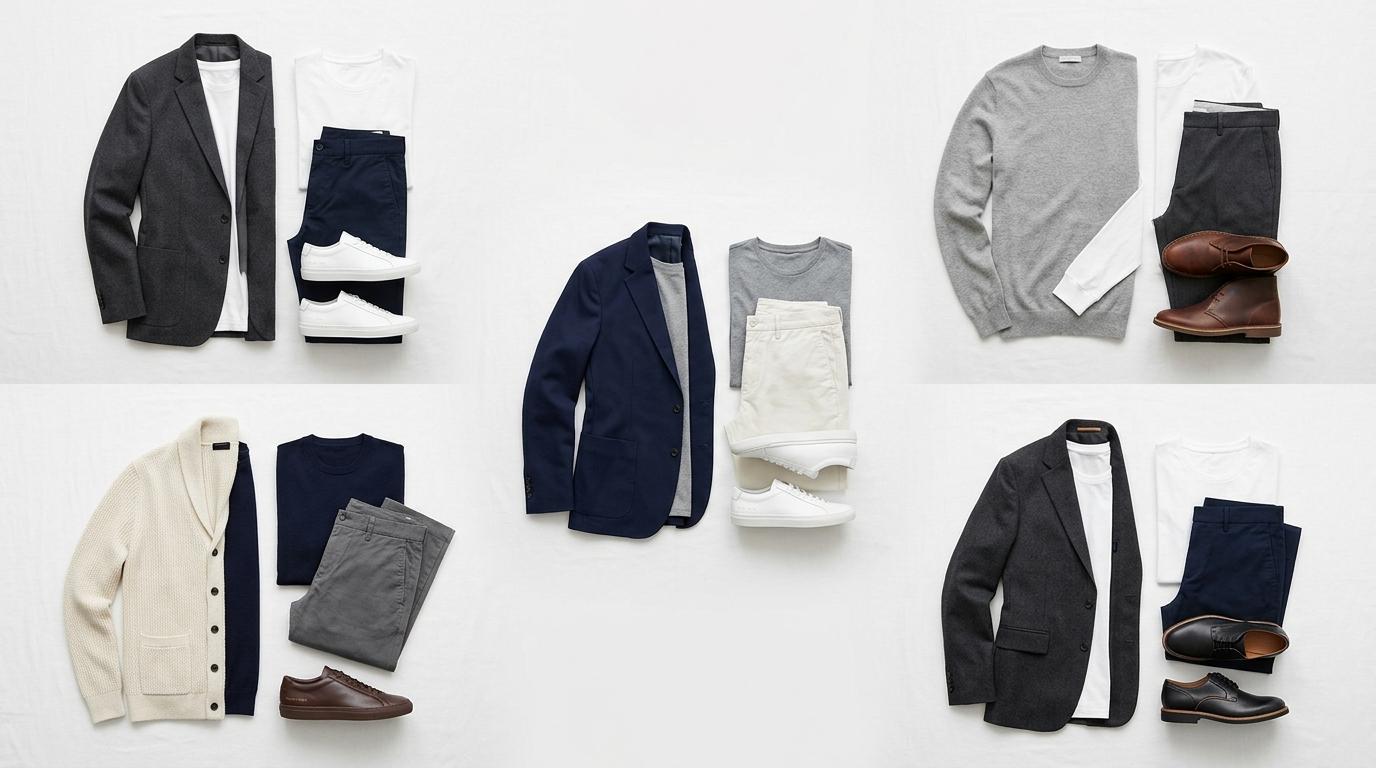
5 Outfit Formulas That Work Every Weekday Morning
Morning outfit decisions drain more energy than most people realize. These five formulas remove the guesswork and make every weekday outfit look intentional without any extra thought.
Occasion Dressing
Occasion Dressing Decoded: What Every Dress Code Actually Means
Cocktail attire. Smart casual. Black tie optional. Every invitation carries a dress code, and most of them are misread. Here is the definitive guide to what each one actually requires.