Styling
How to Dress for Spring When the Weather Won't Cooperate
Layering strategies, transitional pieces, and the mindset shift that makes unpredictable weather actually easy to dress for.


You checked the forecast. It said 14 degrees and partly cloudy. You put on a light jacket and a nice top, felt great walking out the door — and by 2 PM you were sweating through a meeting or shivering at a sidewalk cafe. Spring does this to everyone, and no amount of weather apps can fully prepare you for a season that flips between winter and summer three times before lunch.
The real problem is not the weather. It is that most of us dress for one temperature and hope for the best. Spring asks for something different — outfits that can adapt mid-day without looking like you packed for a hiking trip. And honestly? Once you learn to think in layers instead of single outfits, spring becomes the most versatile dressing season of the year.

Why Spring Dressing Feels So Hard
Winter is simple — grab the warmest thing you own. Summer is even simpler — wear as little as socially appropriate. But spring sits in this annoying middle ground where the morning feels like late autumn and the afternoon feels like early June. Your body cannot decide what it needs, and neither can your wardrobe.
There is also a psychological reset happening. After months of heavy coats and dark tones, you want to feel lighter. You reach for that floral blouse or those white trousers and then the 8 AM wind reminds you it is still technically cold outside. So you throw a puffer over a spring outfit and end up looking like two seasons stitched together — because that is exactly what happened.
The fix is not owning more "transitional" clothes. It is changing how you assemble what you already have. Think of spring dressing less like choosing a single outfit and more like building a kit that works across a 15-degree temperature swing.
The Layering Formula That Actually Works
Effective spring layering follows one rule: every layer should look complete on its own. If you remove the jacket, the outfit should still work. If you take off the cardigan, the top underneath should not look like underwear. This is the difference between strategic layering and just piling on clothes.
Base layer: something you would wear alone in summer. A fitted tee, a linen blouse, a Breton stripe top, a simple tank with good structure. Nothing see-through, nothing fragile. This is the piece that survives when the afternoon heats up.
Mid layer: warmth without bulk. A lightweight knit, a cotton cardigan, a denim jacket, or a thin overshirt. This is your morning-and-evening insurance. It should be easy to carry — tied around the waist, draped over a bag, folded into a tote. If it is too bulky to carry comfortably, it is too heavy for spring layering.
Outer layer: protection, not warmth. A trench coat, a light water-resistant jacket, or an unlined blazer. Spring outerwear should block wind and light rain, not trap heat. You are not trying to stay warm with this layer — you are trying to stay dry and polished. The moment you treat your spring coat like a winter replacement, you overheat by noon.
The beauty of this system is removal. At 9 AM you are wearing all three layers. By noon you have dropped down to the base. At an evening dinner you add the mid layer back. One outfit, three configurations, zero costume changes.
Five Transitional Pieces Already in Your Closet
You do not need to buy spring-specific clothes. Most of the best transitional pieces are things you already own but have mentally filed under a different season.
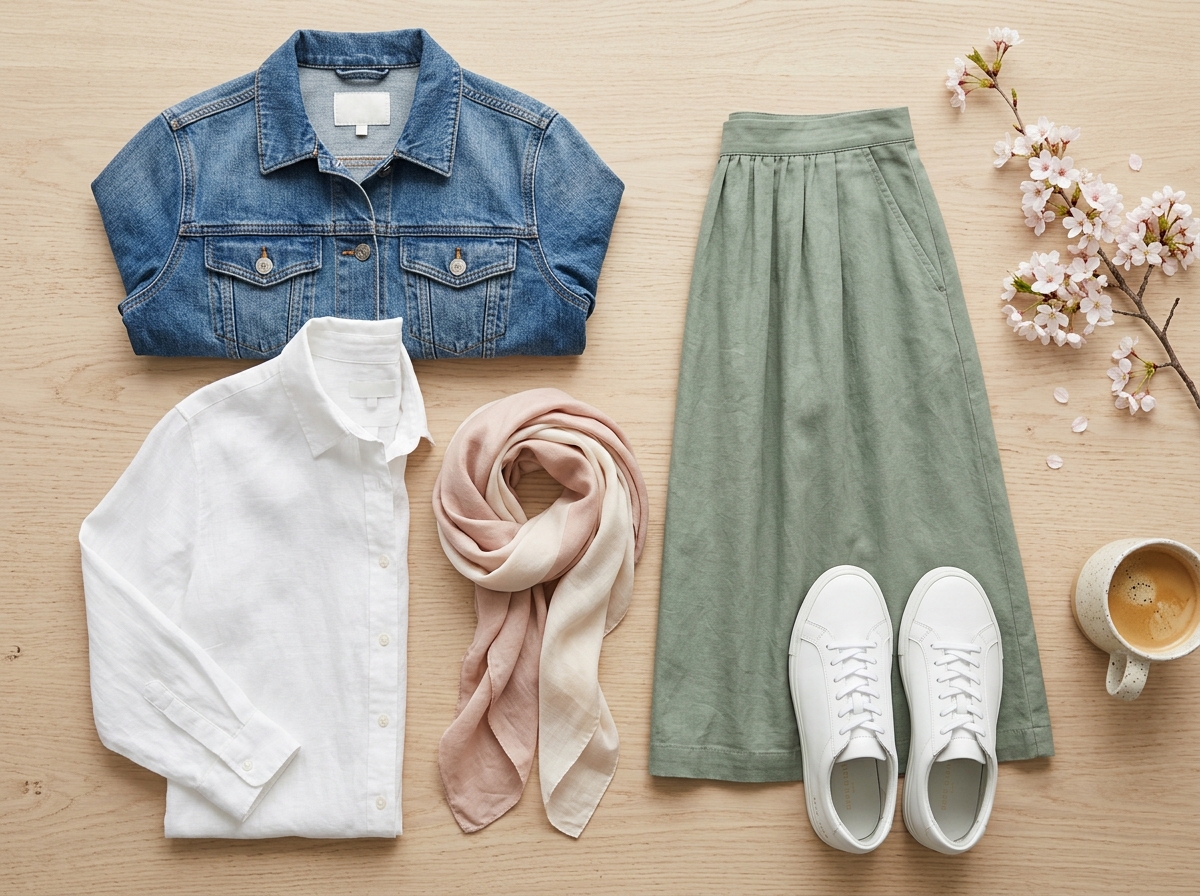
1. The denim jacket you stopped wearing. Denim sits in the perfect weight zone for spring — warm enough for a cool morning, light enough to tie around your waist at lunch. It pairs with literally everything from dresses to tailored trousers. If yours feels dated, try wearing it open over a fitted top instead of buttoning it up.
2. The lightweight scarf buried in your drawer. A cotton or modal scarf adds warmth to your neck and chest — the area that gets cold first — without adding bulk anywhere else. It also transforms a plain tee outfit into something that looks considered. Drape it, do not wrap it tight.
3. The button-down you wear to work. Unbutton it over a tank top and you have a layering piece that breathes when open and warms when closed. Cotton and linen shirts are natural temperature regulators. Roll the sleeves when it heats up — instant mood shift.
4. The midi skirt you only wear in summer. Pair it with ankle boots and a knit top instead of sandals and a cami. A heavier shoe grounds the look for cooler days, and tights underneath add warmth without changing the silhouette. The same skirt, completely different season.
5. Your "nice" sneakers. Spring is the season where trainers finally look intentional instead of lazy. They work with trousers, midi skirts, light dresses, and layered looks. If you have a clean pair of white or neutral sneakers, they are about to become your most-worn spring shoe.
Spring Mistakes You Are Probably Making
Dressing for the temperature you want, not the one you have. The first warm day is not permission to retire your jacket. Spring warm days are liars — they lure you into a sundress at noon and punish you with a cold wind at 5 PM. Always bring a layer, even when the sky looks perfect.
Wearing winter coats into April. Your heavy coat makes you sweat on the train and overheat indoors, but you keep wearing it because the alternative feels too cold. The solution is not a lighter version of the same thing — it is adding warmth in the middle of your outfit instead of on the outside. A merino knit under a light jacket keeps you warmer than a heavy coat over a thin blouse.
Ignoring your feet. Open-toed shoes in early spring are optimistic at best. Your feet get cold faster than any other part of your body, and cold feet make the whole outfit feel uncomfortable. Ankle boots, loafers, and clean sneakers are your spring foundation. Save the sandals for when you genuinely do not need socks.
Buying "transitional" pieces you only wear for three weeks. That light puffer you bought last March? How many times did you actually wear it? Spring shopping is full of pieces that feel necessary in the store and irrelevant by May. Before buying anything for the in-between season, check whether you can solve the same problem by combining what you already own differently. Upload your pieces and test combinations in your Loryve wardrobe to see if the gap is real before spending on it.
A Week of Spring Outfits, No Shopping Required
Here is a practical challenge: build seven days of spring outfits using only what is already in your wardrobe. Pull out your base layers, mid layers, and outer layers. Mix and match them into complete daily kits. Photograph each one.
Monday: Breton stripe tee + denim jacket + tailored trousers + white sneakers. Classic, comfortable, and ready for anything from a meeting to grocery shopping.
Tuesday: Linen blouse (open) over a fitted tank + midi skirt + ankle boots. The blouse becomes your temperature valve — button it up in the morning, leave it open after lunch.
Wednesday: Merino knit + trench coat + dark jeans + loafers. Rainy day armour that still looks polished. The trench handles the weather while the knit handles the cold.
Thursday: Plain white tee + cotton scarf + overshirt + chinos + sneakers. Low effort, high mileage. The scarf and overshirt turn a basic tee into a layered look with texture.
Friday: Summer dress + turtleneck underneath + denim jacket + ankle boots. Your summer wardrobe is not off limits — it just needs a winter partner. The contrast between a light dress and heavier layers is what makes spring styling interesting.
Weekend: Hoodie + tailored trousers + trench + clean trainers. Comfort does not mean sloppy when the proportions are right. The tailored bottom balances the casual top, and the trench adds structure to the whole thing.
Seven days, zero new purchases, and every outfit handles a 15-degree temperature swing. The key is not having more clothes — it is knowing which combinations flex across conditions. Once you build that list, spring mornings stop being stressful and start being the most creative part of your day.

Related articles
Styling
The Layering Formula That Makes Any Outfit Work Harder
Most layered outfits fail not because of the pieces themselves, but because of proportion errors and fabric conflicts. This is the framework for getting it right every time.

Styling
The Spring Edit: 5 Outfits I Keep Coming Back To
Spring can feel like you need a whole new wardrobe when really you just need five combinations that work. These are the outfits I return to week after week — simple, wearable, and easier to put together than they look.

Occasion Dressing
Occasion Dressing Decoded: What Every Dress Code Actually Means
Cocktail attire. Smart casual. Black tie optional. Every invitation carries a dress code, and most of them are misread. Here is the definitive guide to what each one actually requires.