Occasion Dressing
Occasion Dressing Decoded: What Every Dress Code Actually Means
An invitation with a dress code is an act of communication. Knowing how to read it — and respond with precision — is one of the most useful skills in dressing.

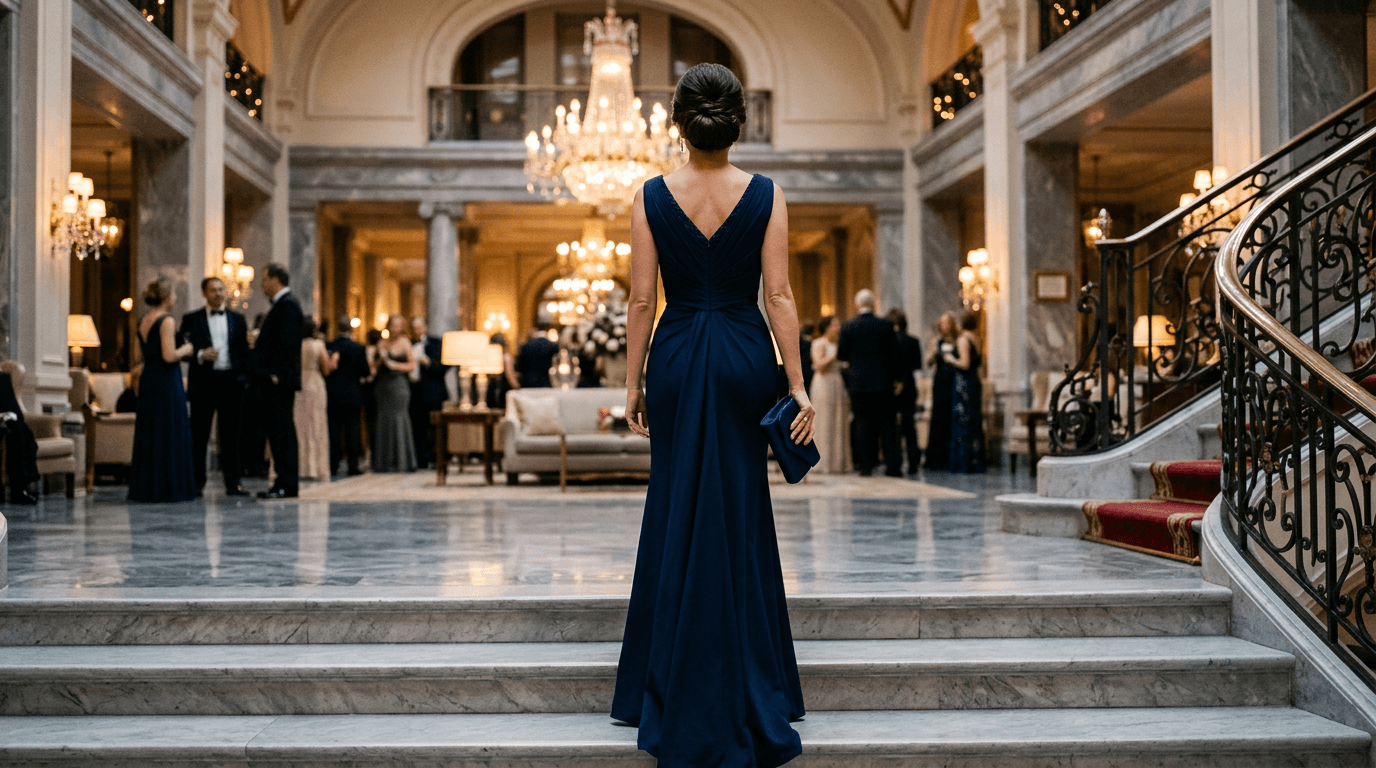
There is a particular kind of anxiety that arrives with a formal invitation — not the social kind, but the sartorial one. The card says “cocktail attire” and suddenly the contents of your wardrobe feel entirely theoretical. You own things, certainly. But do any of them constitute cocktail attire? In what precise way is that different from smart casual, which you were asked to observe last month?
Dress codes are, at their core, a courtesy. They give guests a shared framework — a sense of the formality level the host is setting and the register they are inviting you to match. Reading them correctly is not about following rules for their own sake. It is about arriving somewhere and feeling appropriately placed in the room.
Why Dress Codes Still Matter
The temptation, in an era of blurred formality lines, is to treat dress codes as suggestions — guidelines that can be softened or ignored if your personal aesthetic does not align. This is a misreading. A dress code is a request from a host about the tone of their event. Ignoring it is not an expression of individual style; it is a failure to listen.
That said, dress codes have always allowed for interpretation within their registers. “Black tie” does not require that every woman wear a ballgown — it establishes a floor of formality and leaves room to work within it. The skill is understanding where that floor is and dressing at or above it, with your own taste applied within those parameters.
Underdressing consistently reads as carelessness or disrespect, regardless of intent. Overdressing, in most contexts, reads as trying too hard — though it is the more forgivable error. The goal is proportion: being dressed to the occasion, neither below it nor so far above it that you stand apart from the room in a way that reads as a statement.
The Formality Spectrum, Explained
From most relaxed to most formal, here is what each code requires in practice.
Casual. Rarely appears on an actual invitation because it implies the host has no dress expectation at all. In practice this means clean, considered clothing — nothing that suggests you came directly from another activity. Jeans are fine; anything visibly worn or too sporty is not.
Smart casual. The most commonly misread code. It does not mean “casual with one nice item.” It means a polished, put-together look that does not require formalwear. For women: a midi dress, tailored trousers with a structured top, or a well-cut blazer over something simple. The key word is smart — the outfit should look as though it was assembled with intention.
Business casual. Primarily relevant to work contexts. Polished without being formal: no trainers, no denim, no casual knitwear. A tailored dress, a blouse with trousers, a structured jumpsuit. Think of it as smart casual with a slightly more conservative frame.
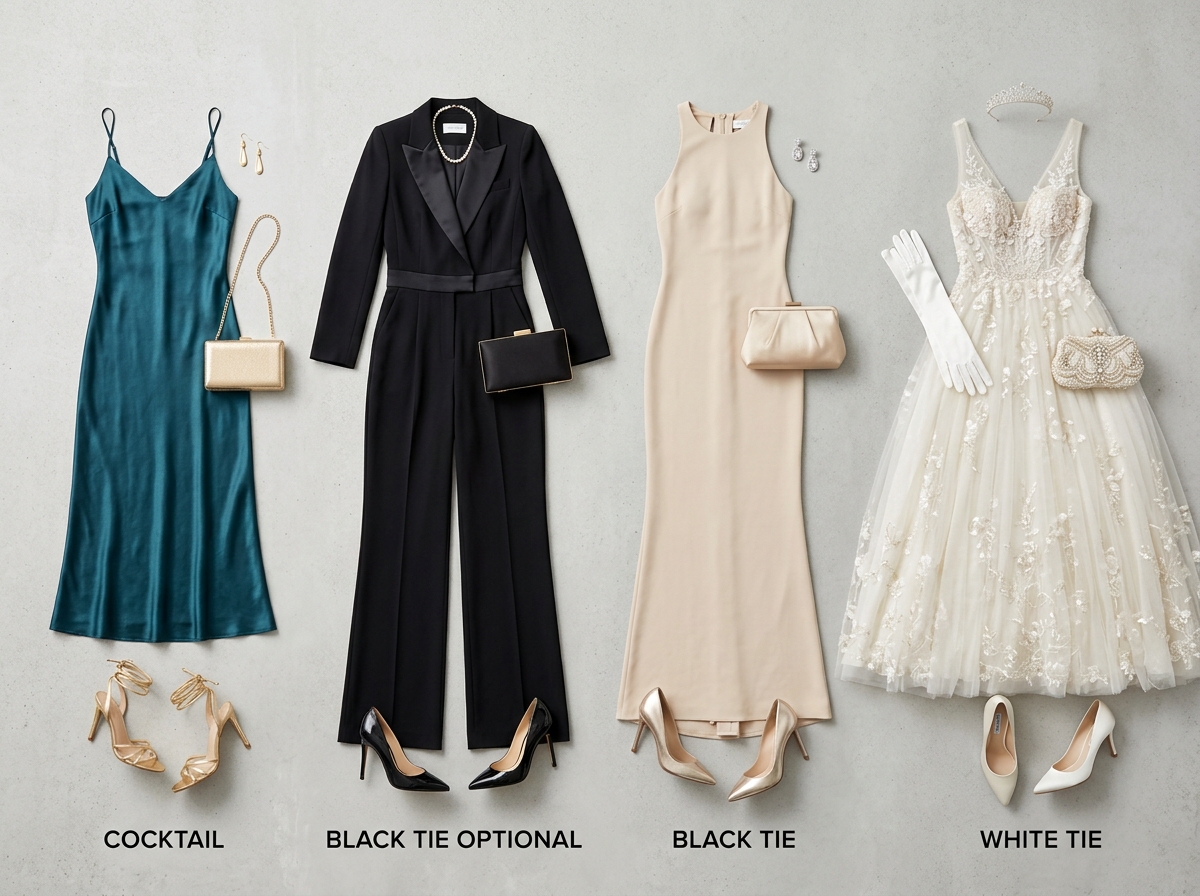
Cocktail attire. A knee-to-midi length dress or a tailored separates combination. The level of formality is real — this is evening wear, not elevated daywear. A beautiful midi slip dress, a well-constructed sheath, a sleek trouser suit in a refined fabric. Avoid anything that reads as too casual in silhouette, even if the fabric is elevated.
Black tie optional. This code gives men the choice between a tuxedo and a very formal suit; it gives women the choice between a floor-length gown and a very formal cocktail-length look. “Optional” does not mean the formality is optional. It means the specific garment is flexible. Your level of dressing should be indistinguishable from a standard black tie event.
Black tie. Floor-length gown as the default for women. A formal cocktail dress or elegant jumpsuit in the right fabrication is acceptable, but the level of dressing must be unambiguously formal. Fabric matters: silk, satin, velvet, crepe. Nothing that reads as daywear regardless of length.
White tie. The most formal dress code that exists. For women: a full ballgown, floor length without exception, in the most refined fabrics and construction available to you. This is not a code that accommodates alternatives. If you receive a white tie invitation and do not own something appropriate, renting or commissioning is the correct response.
The Most Misunderstood Codes
Cocktail attire is the code most frequently underdressed. The error is treating “cocktail” as permission to wear anything from the smarter end of daywear. It is not. Cocktail attire is evening wear: the fabrication should be evening-appropriate (silk, satin, lace, structured crepe), the silhouette should be considered, and the overall look should read as genuinely dressed up. A beautiful wrap dress in a jersey fabric usually falls short. A sleek midi in silk charmeuse does not.
Smart casual is the code most frequently misread in both directions: either treated as too relaxed (good jeans and a nice top is not sufficient if the context is a gallery opening or a formal lunch), or over-interpreted as a reason to wear something clearly formal when the occasion does not call for it. Read the context alongside the code: a smart casual wedding in a vineyard has different parameters than a smart casual corporate dinner.
Dressy casual — a recent addition to invitation language — sits between smart casual and cocktail. It invites effort without requiring full eveningwear. An elevated midi dress, refined separates, a silk blouse with tailored trousers. The emphasis is on “dressy” rather than “casual” — approach it from the top down.
If you want to see how your existing wardrobe maps to these formality levels, explore your pieces in Loryve to find what you already have for each occasion tier.
Where Occasion Dressing Goes Wrong
Treating fabric as a substitute for formality level. A midi dress in the right fabric can meet a cocktail code; the same silhouette in jersey cannot, regardless of how expensive the jersey is. Formality is communicated through fabric, construction, and silhouette together — not through price alone.
Over-accessorising to compensate for an outfit that is slightly off. If the dress is not quite formal enough, adding statement jewellery does not close the gap. It draws attention to the gap. When the outfit is right, the accessories are secondary. When the outfit is uncertain, accessories cannot rescue it.
Wearing the shoes for the wrong occasion. Shoes carry significant formality information. A beautiful evening gown with flat sandals reads as unresolved. A cocktail dress with the right heel reads as complete. Shoes are the finishing signal — and a mismatch between shoe formality and outfit formality is one of the most visible errors in occasion dressing.
Defaulting to the same solution for every formal occasion. The same gown worn to every black tie event communicates that you have not engaged with the specific occasion. Within a formality level there is always room for variation — in colour, in silhouette, in fabric. That variation is where personal taste operates, and it is worth exercising.
The occasion is, ultimately, the brief. Read it carefully, dress to its precise register, and then bring yourself to it. That balance — between meeting the room and remaining recognisably yourself — is what occasion dressing, at its best, achieves.
Related articles

Occasion Dressing
Date Night Dressing When You Have No Idea Where to Start
Standing in front of a full wardrobe with nothing to wear is a date-night rite of passage. But the problem is almost never the clothes — it is the brief. Here is how to clarify it and dress with confidence.
Styling
How to Nail Smart Casual Without Overthinking It
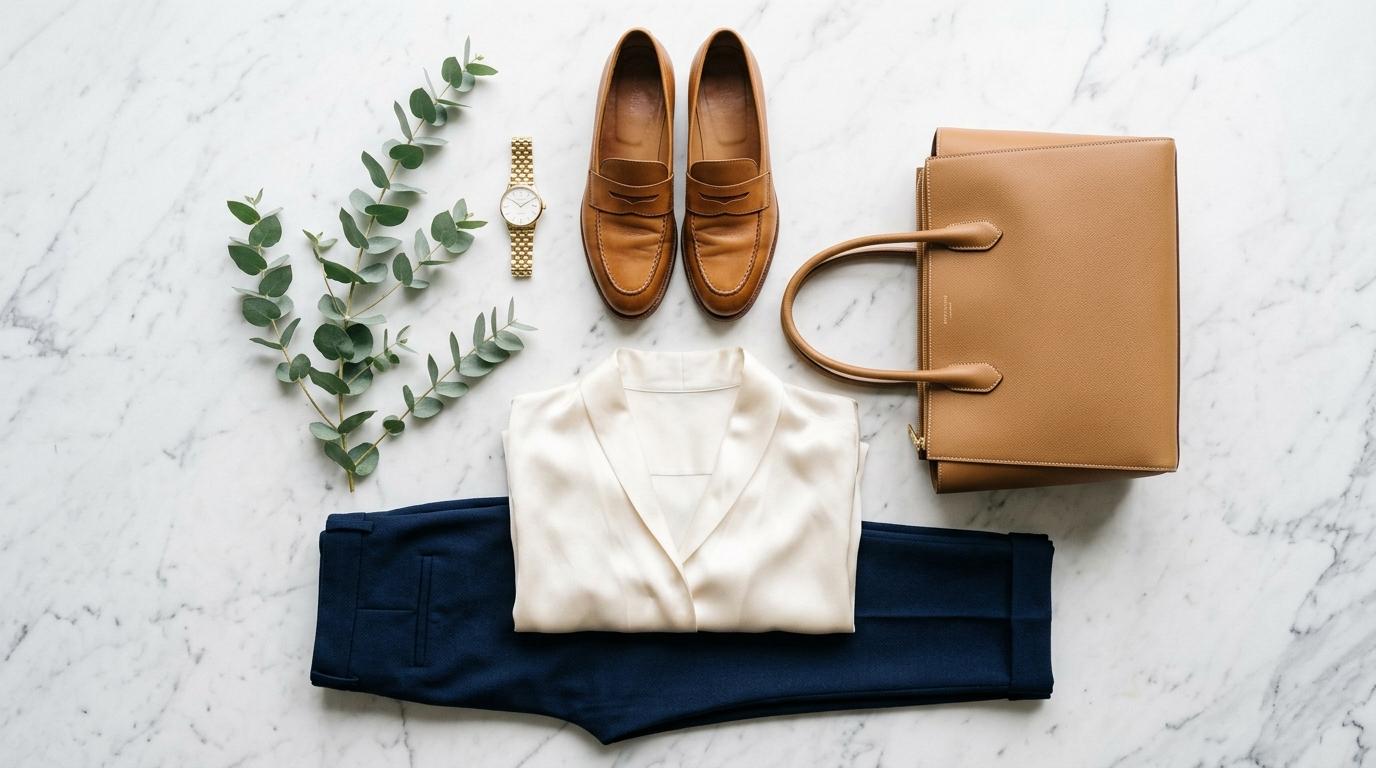
Smart casual sounds simple until you have to get dressed for it. The dress code sits between formal and relaxed with no clear rules — but there is a formula that works every time.

Wardrobe Strategy
7 Wardrobe Pieces Worth Spending More On (And 5 Where It Doesn't Matter)
Spending more does not always return more. But in certain wardrobe categories, quality is the only thing that works — and the wrong call will cost you twice. This is the analytical breakdown.