Styling
The Layering Formula That Makes Any Outfit Work Harder
Layering is not about adding more — it is about building structure. Here is the analytical framework that separates polished from cluttered.

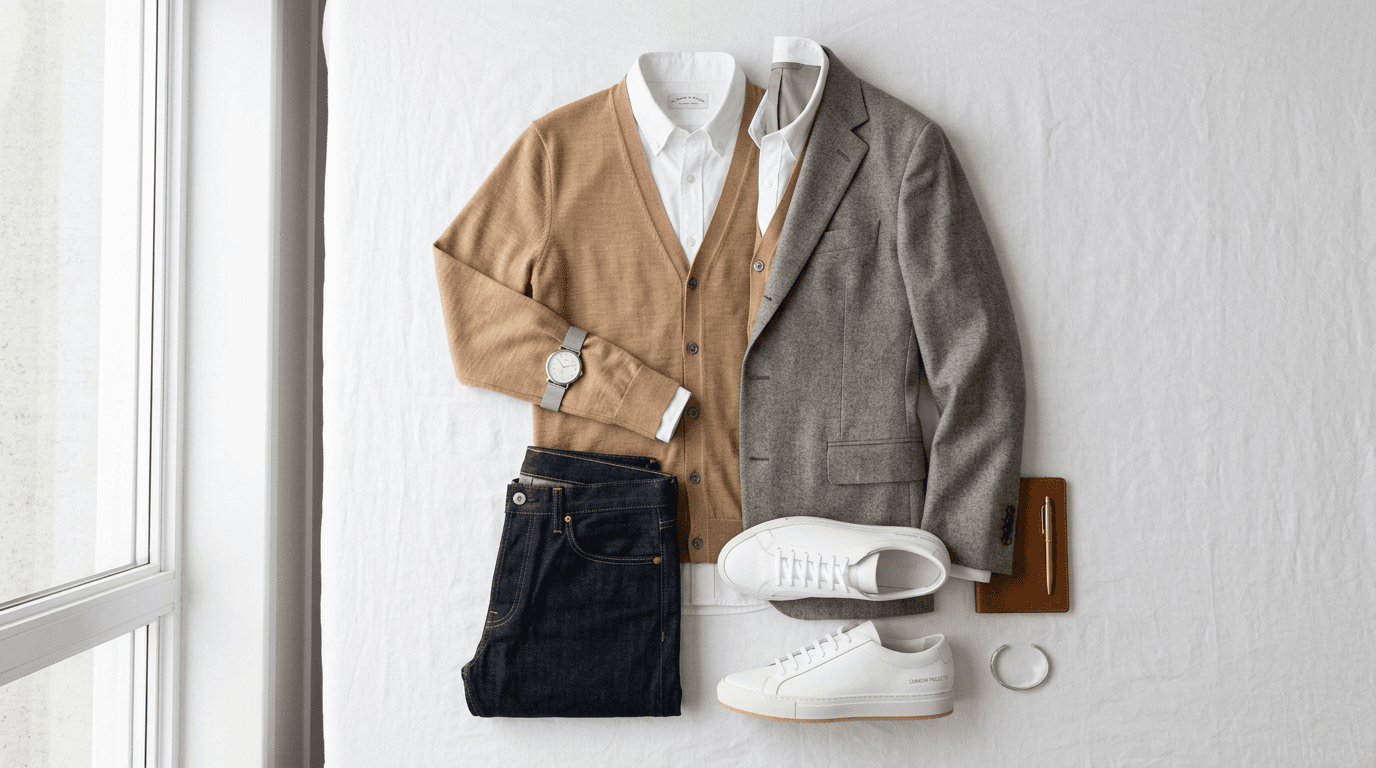
Layering is one of those skills people assume they understand until they try it in a mirror. The result is usually one of two problems: a shapeless pile that adds visual weight without adding interest, or a carefully assembled look that falls apart the moment a coat comes off. Both failures share the same root cause. The pieces were chosen without a system.
The good news is that layering follows consistent rules. Proportion, fabric weight, and length relationships are predictable — and once you understand how they interact, the combinations almost build themselves.
Why Most Layering Fails
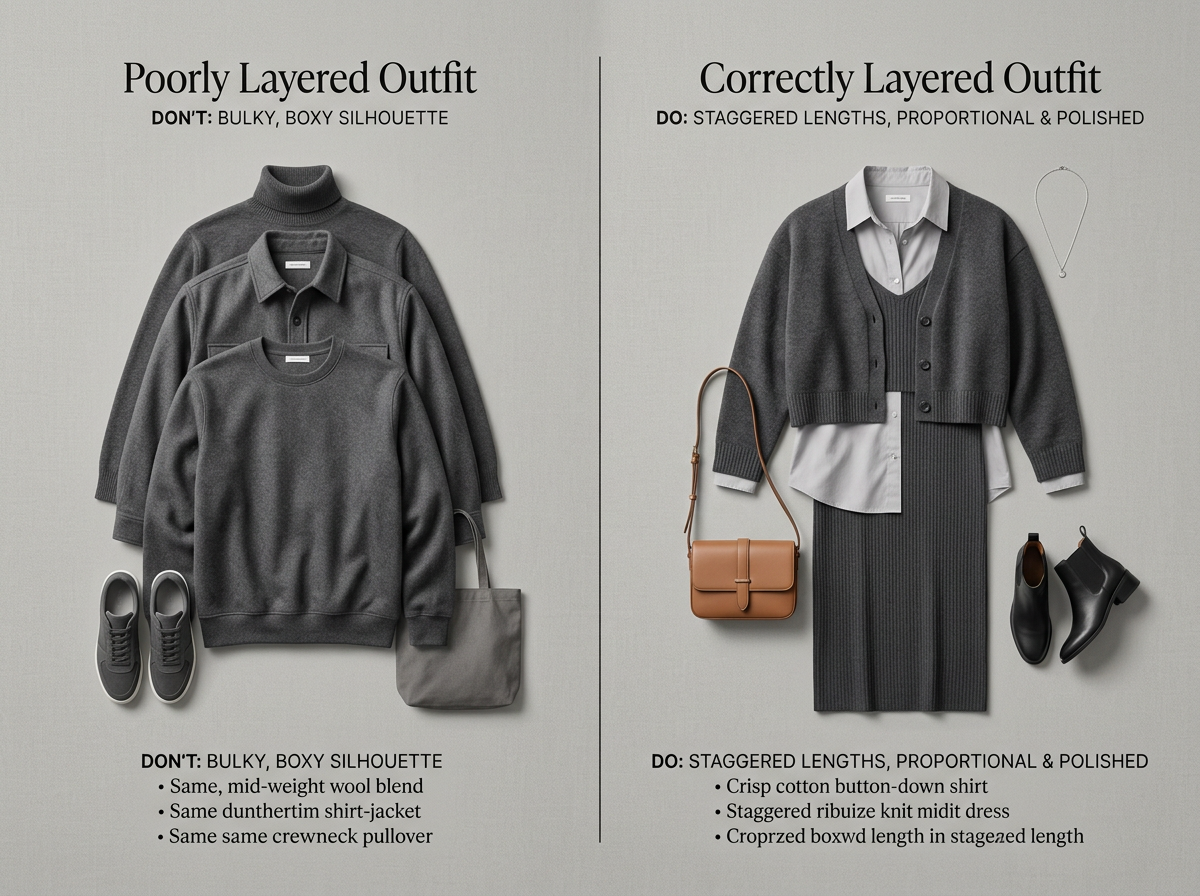
The most common layering mistake is not choosing the wrong pieces. It is choosing pieces that occupy the same visual register. When a shirt, a cardigan, and a jacket are all roughly the same length, the same fabric weight, and the same colour depth, the eye reads them as one undifferentiated mass. The outfit looks heavy because there is no visual separation — no contrast to land on, no point of interest to hold.
The second failure is proportional mismatch. A cropped jacket over a midi skirt can work beautifully, but only if the hem lengths are intentionally spaced. If the jacket just barely clears the waist hem of the skirt, the cut looks accidental rather than deliberate. Intentional layering requires visible gaps — at least 10–15 cm of difference between each hem to signal that the combination was designed, not just assembled.
The third issue is fabric conflict. Certain textures compete when layered, rather than complement. Two matte cottons at the same weight read as one garment. A silk blouse under a matte cotton blazer reads as two. The contrast does the work.
The Three-Layer Principle
Every well-layered outfit operates on three functional roles, regardless of how many individual pieces are worn.
The base layer sits closest to the body and defines fit and silhouette. It should be the most fitted element of the outfit — a slim shirt, a fine-gauge knit, a bodysuit, or a simple fitted tee. The base sets the body outline that every other piece will build around.
The structure layer adds shape and mid-point interest. This is typically the piece with the most considered silhouette — a blazer, a structured cardigan, a denim jacket, a waistcoat. Its job is to define the waist and anchor the overall proportions.
The finish layer is the outermost element and governs the first impression. A coat, an oversized shacket, a trench. This piece should be either the most neutral or the most intentional choice in the outfit — it carries the most visual weight by default.
Not every outfit needs all three. A strong base plus structure layer, worn with no outer layer, is a complete system. The point is to assign each piece a role before wearing it, not to keep adding until the outfit “looks right.”
Proportion Ratios That Hold Everything Together
The most reliable layering ratios follow a simple logic: long under short, or short under progressively longer. What breaks outfits is the reverse — a longer piece tucked under a shorter one with no visible hem relationship.
Practical length rules that consistently work:
- Cropped outer over full-length base: A blazer or jacket that ends at the hip looks most intentional when the shirt or dress underneath drops at least to mid-thigh. The length gap signals purpose.
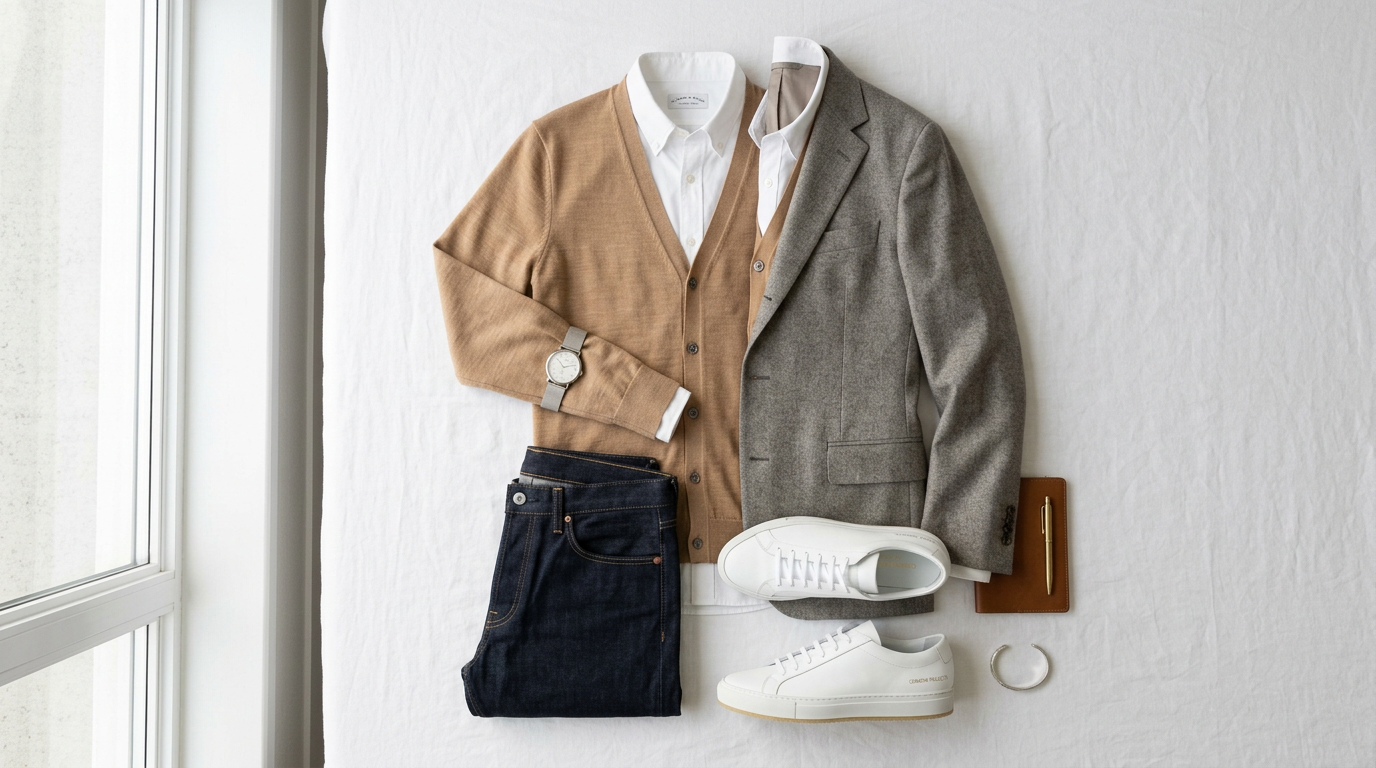
- Layered knit over shirt: Let the shirt hem fall 5–8 cm below the knit. If both end at the same point, the combination disappears. The visible shirt hem becomes a deliberate detail, not an accident.
- Longline cardigan over fitted base: Works best with tapered trousers or slim jeans, not wide-leg cuts. The proportion balance shifts — the vertical length of the cardigan needs something fitted below to avoid a shapeless column.
- Oversized outer over slim silhouette: The outer piece can be as relaxed as needed, provided the base layer is genuinely fitted. The contrast between generous outer and slim base creates the proportion, not the outer layer alone.
Fabric Logic: What Goes Under What
Fabric weight follows a structural logic: lighter, thinner fabrics underneath; heavier, more structured fabrics above. This is not a rigid rule but it is the default that works, and deviating from it requires a deliberate reason.
More useful than weight categories is thinking about surface contrast. The most polished layered outfits pair fabrics with meaningfully different surfaces:
- Smooth cotton shirt under a textured wool blazer
- Silky blouse under a matte structured jacket
- Fine-gauge ribbed knit under a heavier overcoat
- Sheer organza layered over a solid fitted base
When two pieces share similar texture and similar weight — matching cotton, matching jersey — the layering reads as accidental. Adding a third piece in a contrasting weight (a leather belt, a denim jacket, a structured outer) is often enough to break the monotony.
One exception worth noting: tonal layering — the same colour in different fabrics and weights — is a reliable technique for a clean, minimal aesthetic. The contrast comes entirely from fabric rather than colour, which demands greater precision in texture selection, but produces a very polished result when it lands correctly.
Five Layering Combinations That Always Work
These are not trend-dependent. They work across seasons because the proportions and fabric logic are sound.
- Slim-fit tee + blazer + trench coat: Three clearly distinct pieces at three clearly distinct hem lengths. The tee defines the body, the blazer provides structure and waist, the trench finishes. Swap colour combinations freely — the structure holds.
- Fine-gauge turtleneck + wool blazer: The turtleneck reads as a refined base rather than a casual one. Slim trousers or tailored shorts below. Reliable for transitional weather.
- Button-down shirt + chunky knit + midi coat: Visible shirt collar above the knit is the detail that makes this intentional. The longer coat anchors the bulk of the middle layer. Keep footwear clean.
- Slip dress or skirt + fitted long-sleeve base + oversized jacket: The structured outer over the slim dress with a visible long sleeve underneath creates three visible elements without visual overload.
- Cropped cardigan + wide-leg trousers + tailored coat: The short cardigan requires a very fitted base underneath. The wide-leg trouser provides the volume below, balanced by a longer outer layer. This is a more deliberate combination that rewards precise length management.
If you want to test how these layer combinations work with the pieces already in your wardrobe, try them in your Loryve wardrobe before committing to a combination you are unsure about.
The Mistakes That Make Layers Look Heavy
Most layering failures can be diagnosed against a short checklist.
Matching hem lengths across all layers. If a shirt, a cardigan, and a jacket all end at the same point, the silhouette collapses into a block. Vary the hem positions deliberately.
Adding volume without a fitted anchor. Two or more relaxed pieces layered together amplify rather than complement each other. One element — usually the base — needs to be fitted.
Using colour to differentiate when fabric contrast is the real need. Three neutral pieces in cream, ecru, and off-white can work in tonal layering, but only if the fabrics are visually distinct — a smooth cotton, a textured knit, a matte suede. Without fabric contrast, tonal layering becomes tonal sameness.
Treating the inner layer as invisible. If the base layer is completely hidden, the outfit is just two pieces — and should be assessed as such. If it is visible, it is an active part of the design and needs to be chosen accordingly.
Ignoring weight distribution in warmer weather. Spring layering specifically benefits from a light touch: thin jersey, open-weave knits, unlined blazers. Stacking bulky pieces in April creates physical discomfort that the outfit cannot compensate for.
The underlying principle behind all of these corrections is the same: layering is a design decision, not a comfort reflex. The best layered outfits look as though each piece was selected to be seen — which, if you have built the combination correctly, it was.
Related articles

Styling
How to Dress for Spring When the Weather Won't Cooperate
Spring mornings are cold, afternoons are warm, and your outfit has to survive both. Here is how to layer without looking bulky and dress for a season that changes its mind every three hours.

Styling
The Spring Edit: 5 Outfits I Keep Coming Back To
Spring can feel like you need a whole new wardrobe when really you just need five combinations that work. These are the outfits I return to week after week — simple, wearable, and easier to put together than they look.
Occasion Dressing
Occasion Dressing Decoded: What Every Dress Code Actually Means
Cocktail attire. Smart casual. Black tie optional. Every invitation carries a dress code, and most of them are misread. Here is the definitive guide to what each one actually requires.